
Pilot Assist
Provides steering support to help keep the XC90 centered in its lane while working with speed and distance control.

The 2026 Volvo XC90 comes standard with a broad suite of active driver-support technologies on the Core equipment level, including Pilot Assist, Adaptive Cruise Control, BLIS with Cross Traffic Alert, Lane Keeping Aid, Oncoming Lane Mitigation, rear collision mitigation, front and rear Park Assist, and Road Sign Information. This page breaks down the major systems, how they work, and what Plus and Ultra add. View current XC90 inventory at Volvo Cars Hilton Head.
Every 2026 XC90 starts with a substantial standard driver-support foundation. Volvo groups these technologies around collision avoidance and mitigation, lane support, surrounding-traffic awareness, parking assistance, and driver information.
Provides steering support to help keep the XC90 centered in its lane while working with speed and distance control.

Adjusts vehicle speed to help maintain a selected distance from traffic ahead.

Monitors adjacent traffic and supports the driver during lane changes and reversing maneuvers.

Can gently steer the vehicle back when it unintentionally leaves its lane.

Can help steer the XC90 back into its lane if it drifts toward an oncoming vehicle.

Uses rear-facing safety logic intended to help reduce the effects of a possible rear collision.

Uses sound and graphics when maneuvering in tight spaces and can apply automatic braking when needed.

Helps keep the driver informed about speed limits and other recognized road restrictions.

Monitors for collision risk ahead and can warn the driver or intervene when an urgent risk is detected.
Intelligent Driver Information System (IDIS) is also standard. It analyzes driving intensity and can delay secondary vehicle information during moments of heavy steering, braking, or acceleration so non-critical alerts are less likely to compete for the driver's attention.
Pilot Assist combines speed management, distance keeping, and steering support. It can operate in highway driving and in slower traffic queues when conditions allow. The driver remains responsible for supervising the system and keeping hands on the steering wheel. If the driver does not respond to repeated requests to take an active role, the XC90 can initiate a controlled stop and activate the hazard warning flashers.
The XC90 monitors the road ahead for developing collision risks. Depending on urgency, the vehicle can issue visual, audible, or brake-pulse warnings and may intervene to help avoid or mitigate a collision if the driver does not respond in time.
BLIS monitors vehicles beside and behind the XC90. When a vehicle is detected in a blind area, the mirror indicator alerts the driver. The system can also provide steering support if the driver moves toward an occupied adjacent lane. Cross Traffic Alert extends awareness while reversing.
At low speeds behind another vehicle, Pilot Assist can continue to manage following distance and steering support when the road and sensor conditions allow. That makes the system particularly useful in congested traffic around the Hilton Head area and on I-95 approaches.
Lane Keeping Aid monitors lane markings and can apply gentle steering assistance if the XC90 begins to leave its lane unintentionally. Depending on the situation and settings, steering-wheel vibration can also warn the driver.
The camera system recognizes supported road signs and displays relevant information in the driver display. On Ultra, the available head-up display can place speed and other driving information in the driver's forward field of view.
If the XC90 drifts across lane markings toward an oncoming vehicle, Oncoming Lane Mitigation can apply steering assistance to help guide the vehicle back toward its lane. This system is standard on Core, Plus, and Ultra.
When a rear-impact risk is detected, the XC90 can use warning and protective responses designed to reduce the effects of the collision. Depending on conditions, this can include warning the approaching driver, preparing occupant-restraint systems, and applying the brakes when the XC90 is stationary.
Plus and Ultra add a 360-degree camera and Park Assist coverage at the front, rear, and sides. The camera provides an overhead-style view on the 11.2-inch center display to make tight parking and low-speed maneuvering easier.
The major difference between Core, Plus, and Ultra is not whether the XC90 has a modern active-safety foundation. Core already includes the principal driver-support systems. Higher equipment levels primarily add visibility, parking, display, and luxury features.
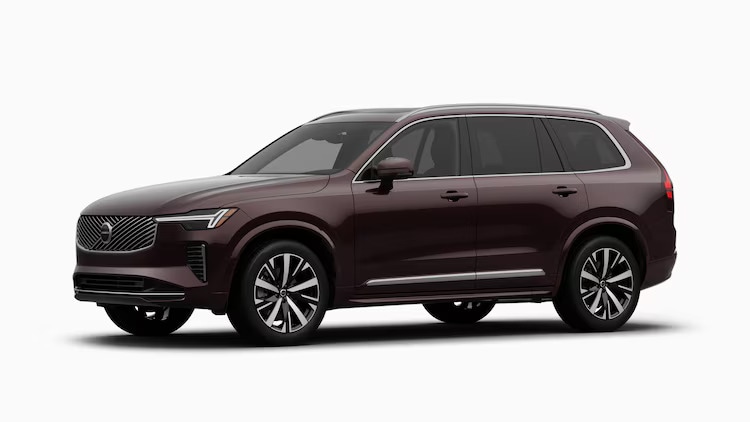
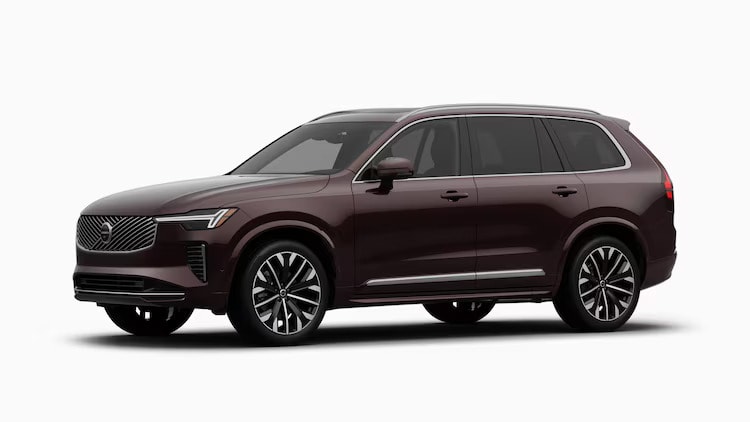
Includes the Core safety foundation and adds:
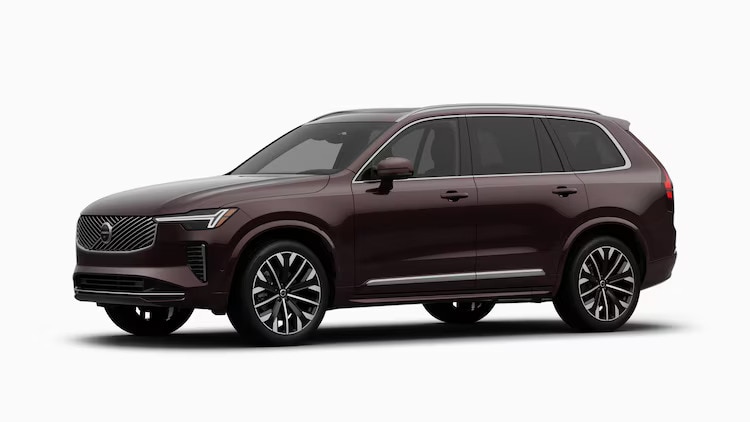
Includes the Plus safety and parking equipment and adds:
The B5 and B6 mild-hybrid powertrains and the T8 plug-in hybrid use the same Core, Plus, and Ultra safety hierarchy. Powertrain choice does not remove the standard driver-support foundation included with the corresponding equipment level.
Compare XC90 B5, B6, and T8 powertrains in the XC90 Research Hub.
Families in Bluffton and the surrounding Lowcountry area deal with two-lane coastal roads, high-volume bridge traffic to Hilton Head Island, and fast-moving interstate segments on I-95. Pilot Assist can reduce the amount of repetitive accelerator, brake, and steering input in supported traffic conditions, while BLIS and lane-support systems add another layer of awareness during merges and lane changes.
The XC90 also combines its driver-support technology with passive protection features including an Inflatable Curtain, side-impact protection, a driver knee airbag, Occupant Weight Sensor, seat-belt protection systems, and ISOFIX mounting points. Seven-seat configurations can carry passengers across all three rows while retaining Volvo's body-structure and restraint-system approach to occupant protection.
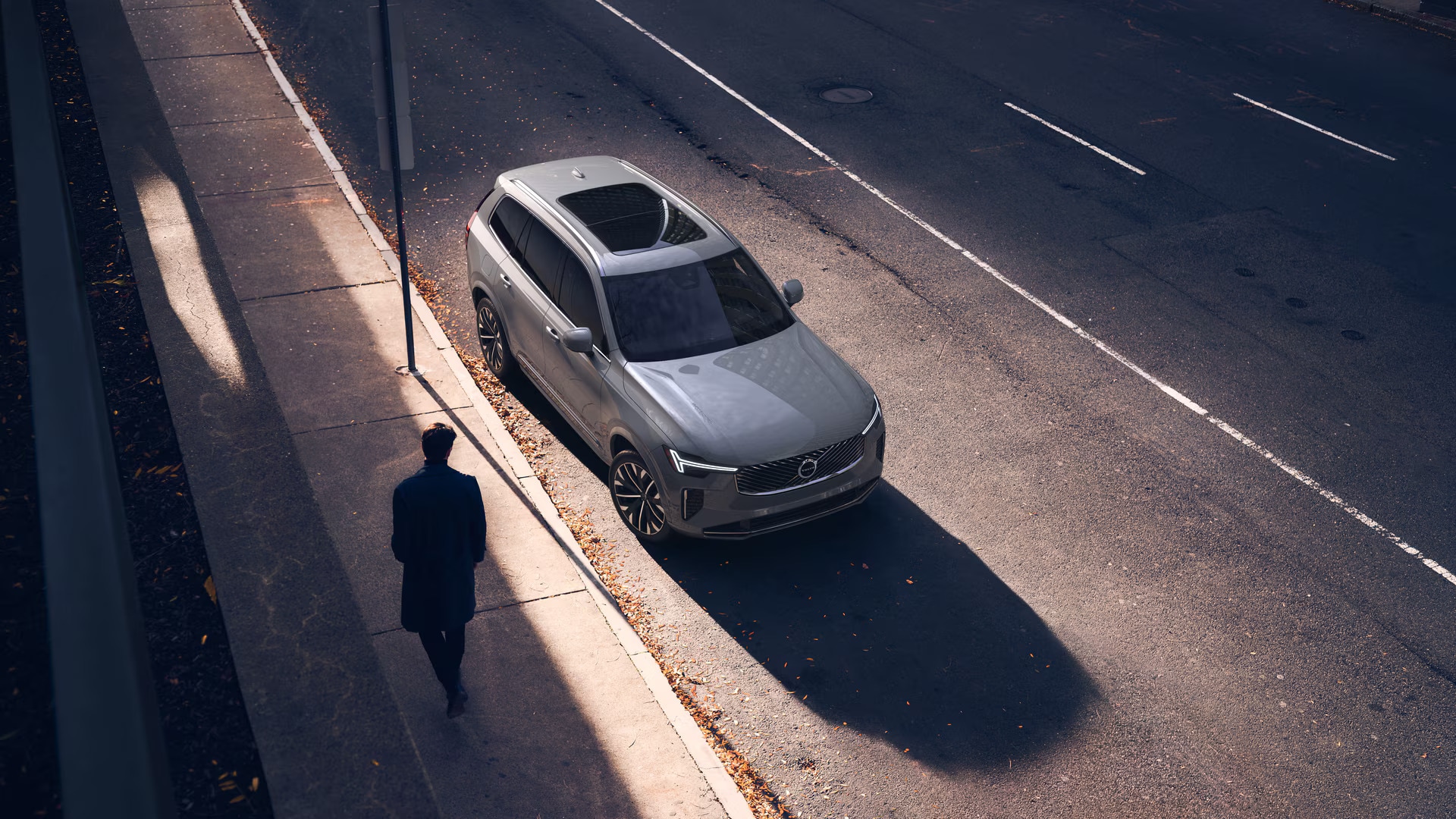
One of the XC90's strongest selling points is how much driver-assistance equipment is already present on Core. Pilot Assist, Adaptive Cruise Control, BLIS with Cross Traffic Alert, Lane Keeping Aid, Oncoming Lane Mitigation, rear collision mitigation, front and rear Park Assist, and Road Sign Information are all listed on current 2026 Core equipment. Plus and Ultra build from that foundation rather than requiring shoppers to move up just to obtain the principal active-safety systems.
When comparing the XC90 with another three-row luxury SUV, check the competitor's exact trim and option package rather than comparing feature names in isolation. Lane-centering, adaptive cruise, blind-spot support, parking-camera coverage, and collision-mitigation functions are packaged differently across brands.
Review NHTSA vehicle safety ratings and crash-test information.
Driver-support technology makes more sense from behind the wheel than it does on a spec sheet. Volvo Cars Hilton Head serves shoppers throughout Bluffton and the broader Lowcountry area, and the team can demonstrate Pilot Assist, BLIS, parking assistance, and lane-support features during your drive.
Yes. The XC90 includes collision-warning and mitigation technology designed to warn the driver and intervene when an urgent collision risk is detected. This protection is part of the XC90's standard safety architecture.
Pilot Assist combines adaptive speed and distance management with steering support. It can help keep the XC90 positioned in its lane while maintaining a selected relationship to traffic ahead. Pilot Assist is standard on the 2026 XC90 Core, Plus, and Ultra equipment levels.
Yes. BLIS with Cross Traffic Alert is standard on the 2026 XC90. BLIS monitors traffic beside and behind the vehicle and can provide steering support if the driver begins moving toward an occupied adjacent lane.
The 360-degree camera is included on Plus and Ultra. Core uses a rear Park Assist Camera plus front and rear Park Assist.
Ultra includes a head-up display that places key driving information in the driver's forward sightline. Road-sign and speed information can be presented without requiring the driver to look down at the center display.
Yes. The XC90 combines three-row seating with passive safety systems including the Inflatable Curtain, side-impact protection, seat belts with protective functions, and a body structure engineered to manage crash forces across the passenger compartment.
Yes. Pilot Assist can remain active at low speeds while following another vehicle when conditions allow, helping manage speed, distance, and steering support in traffic queues. The driver must remain attentive and ready to take control.
No. The main safety and driver-support differences are tied to Core, Plus, and Ultra equipment levels rather than whether the XC90 uses the B5, B6, or T8 powertrain.